
Created by Craig A. C. Symonds and Pollination Guelph

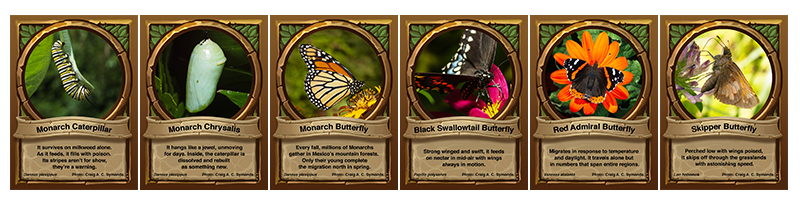
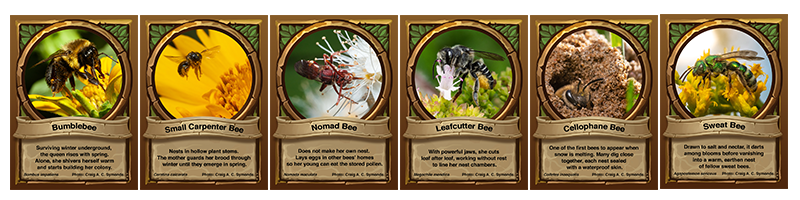
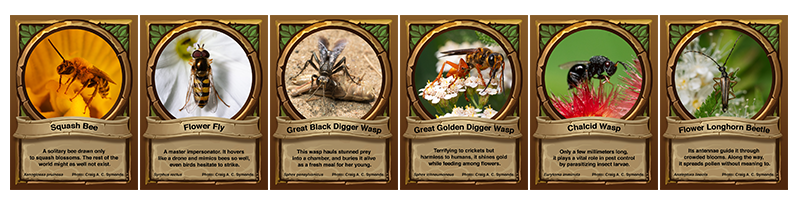

Hello there!Welcome to the world of Pollinators!My name is Craig! People call me the Pollinator Photographer!This world is inhabited by creatures called Pollinators!Some people keep Pollinators in rooftop hives... Others build entire gardens just to attract them.
Myself... I photograph Pollinators as a profession.Your very own Pollinator legend is about to unfold!A world of dreams and adventures with Pollinators awaits!Let's go!

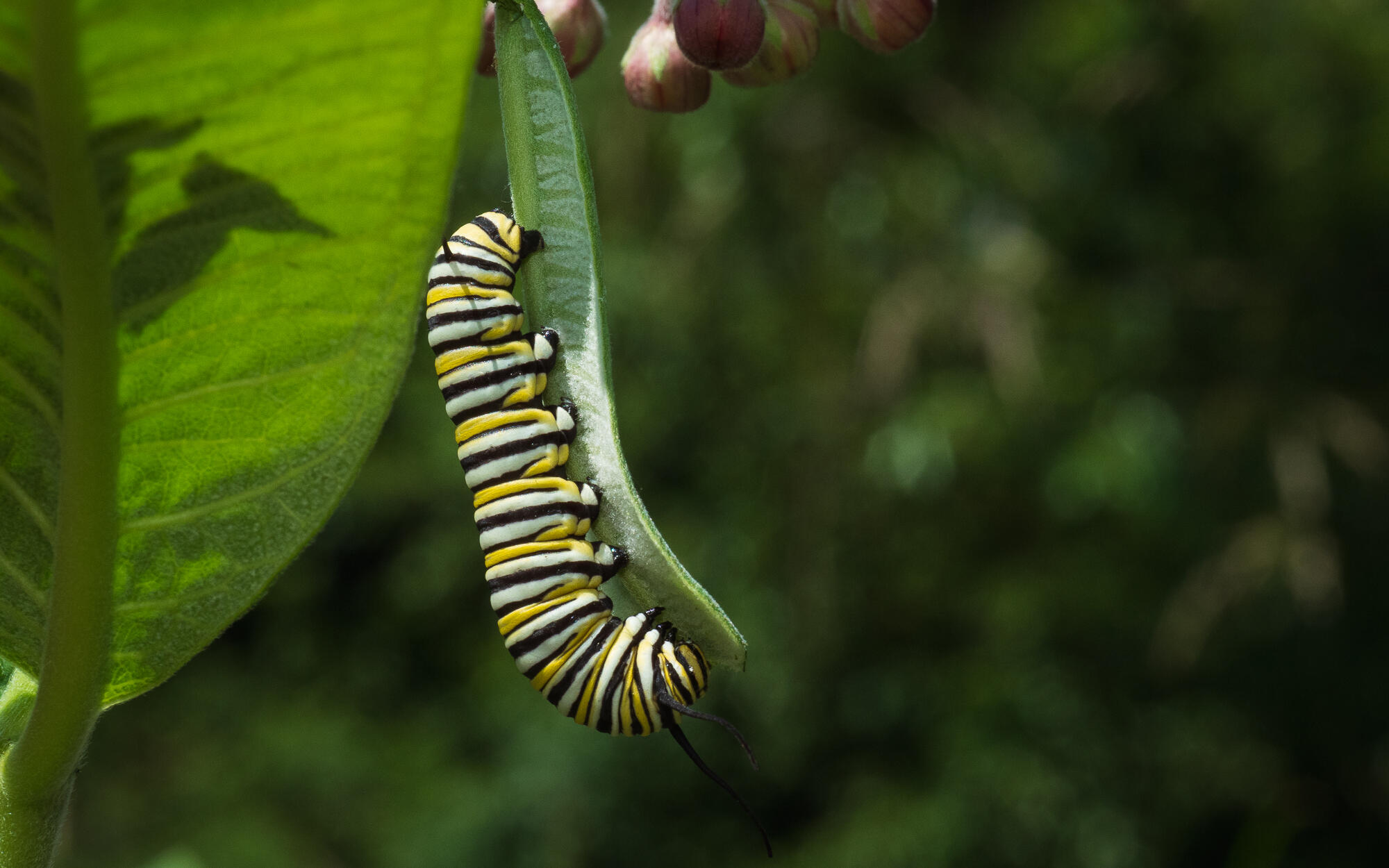
Monarch CaterpillarA monarch caterpillar is a boldly striped munching machine! In the sunny meadows around Guelph, you might spot this critter chewing away on a milkweed leaf. Milkweed is the only food it eats – and eating so much of it makes the caterpillar’s body taste bad to predators. In just a week or two of nonstop snacking, a monarch caterpillar can grow from a tiny hatching to almost 2,000 times its initial weight. It will even outgrow and shed its skin five times as it balloons in size (imagine outgrowing your clothes that often!). All that milkweed munching isn’t bad for the plant – it helps keep milkweed patches healthy and in balance, while fueling the caterpillar for its next stage of life.When it’s ready to transform, the monarch caterpillar wanders off to find a safe spot (maybe under a broad leaf or on a sheltered fence post). There it hangs upside down in a J-shape and molts one last time, revealing a smooth green chrysalis. Inside this magic chrysalis, the caterpillar will metamorphose into a butterfly. By late summer, you can find these hungry monarch caterpillars on milkweed in parks and gardens – a sure sign that beautiful butterflies are on the way!
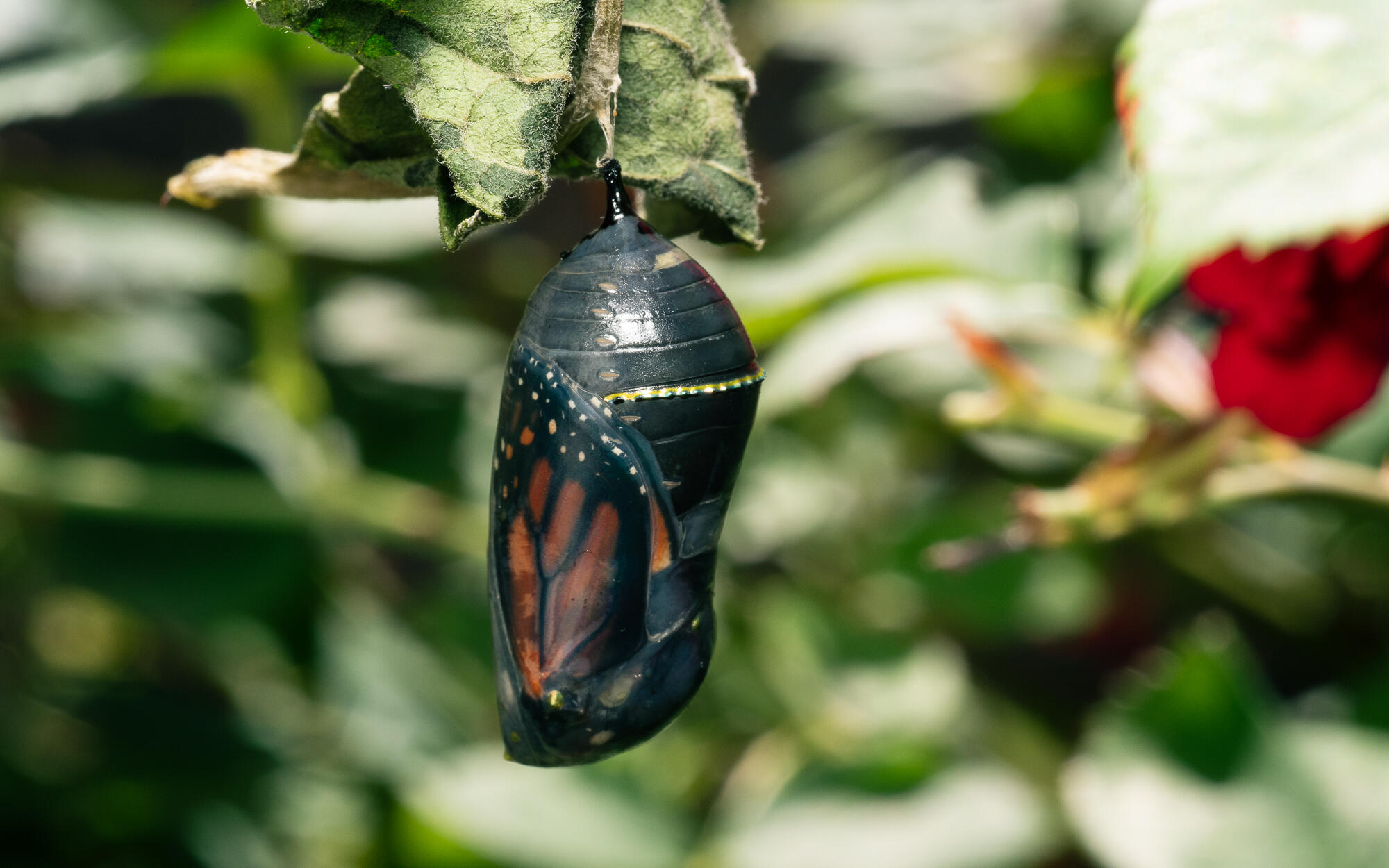
Monarch ChrysalisThe monarch chrysalis is like a living jewel hidden in plain sight. It hangs quietly from a branch or leaf, soft green with shiny gold freckles that look like a tiny crown. Inside this jewel case, an amazing transformation is happening. The caterpillar’s body turns into a liquidy soup and then rearranges into a butterfly – one of nature’s coolest magic tricks called metamorphosis. This process takes about 8 to 15 days. During this time the chrysalis stays very still and well-camouflaged, protecting the delicate changes going on inside. Scientists aren’t entirely sure why the monarch chrysalis has brilliant metallic gold spots; perhaps the spots help it blend into surrounding leaves or maybe they scare off predators.As the new butterfly gets ready to emerge, the chrysalis darkens and turns transparent – you can actually peek in and see the orange-and-black wing patterns of the monarch inside! Finally, the chrysalis splits open and the butterfly carefully pulls itself out. Within a few hours the new monarch pumps fluid into its crumpled wings, lets them dry, and then takes off in a flutter of orange. It’s important not to touch or disturb a chrysalis you find (it’s very fragile), but do take a quiet peek.
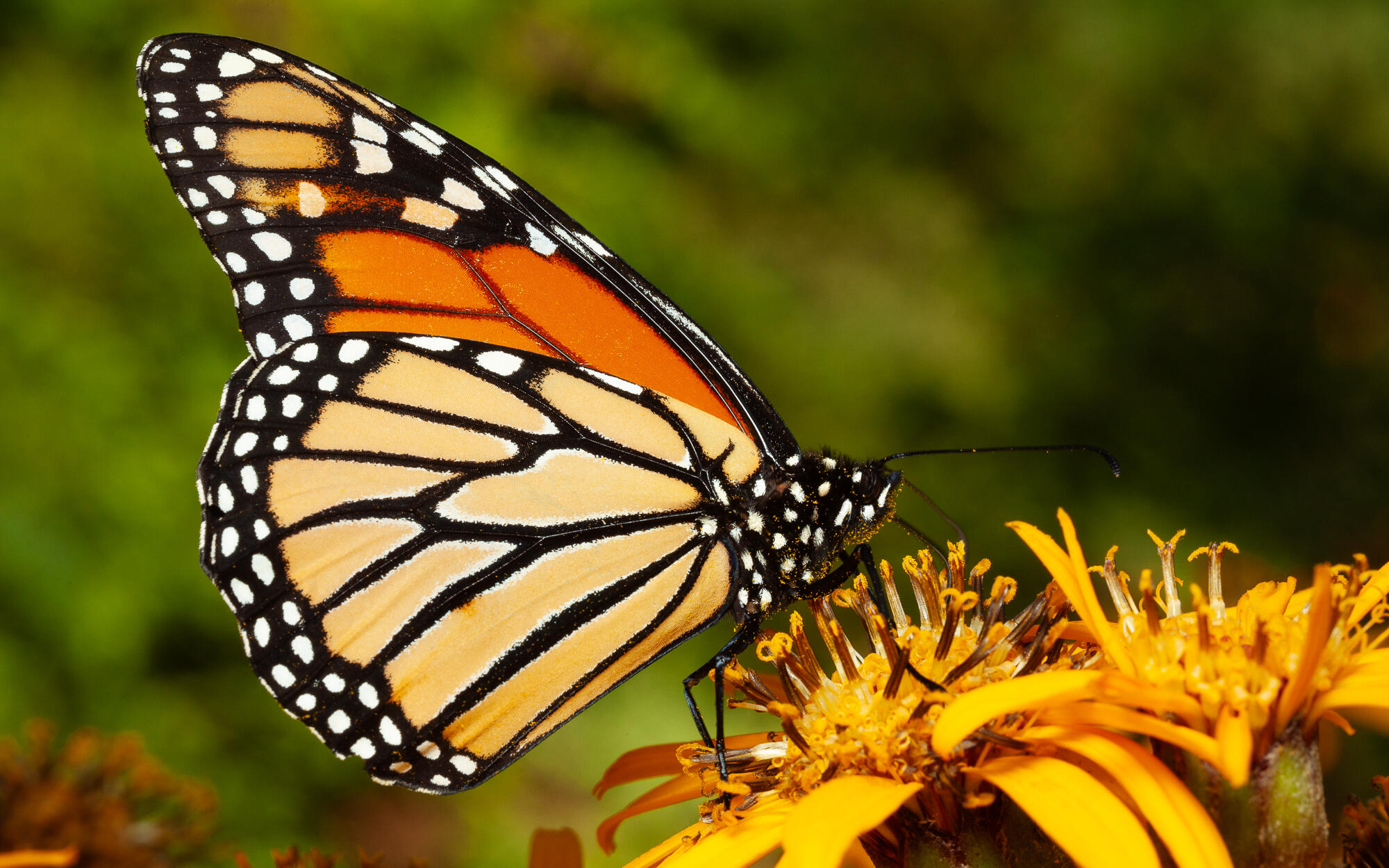
Monarch ButterflyThe monarch butterfly is a true marathon champion of the insect world. With its fiery orange wings laced in black and white, the monarch flutters through gardens and meadows across Ontario each summer, sipping sweet nectar from flowers like milkweed, clover, and goldenrod. As it feeds with its long curled tongue (called a proboscis), the monarch accidentally spreads pollen from bloom to bloom, helping plants produce seeds. Those bright colours on its wings aren’t just for show either. They’re a warning to predators that this butterfly is poisonous to eat (remember the toxins the caterpillar stored from munching milkweed?). Most birds know to avoid a monarch’s bold wings, keeping the butterfly safe on its travels.And what travels it has! Each fall, as the weather cools, Ontario’s monarch butterflies undertake an epic journey – flying all the way to mountainous forests in Mexico. Some monarchs travel nearly 3,000 kilometres, fluttering about 80 km in a day when conditions are good. In those cool Mexican forests, millions of monarchs from all over eastern North America hang in huge clusters, resting until spring. No single butterfly makes the round-trip; the ones that fly south live for many months, then their children and grandchildren begin moving north again. By next summer, new monarchs arrive in Ontario to continue the cycle. It’s incredible that a creature so small can navigate such distances. Their story of migration and return is one of nature’s most inspiring adventures.
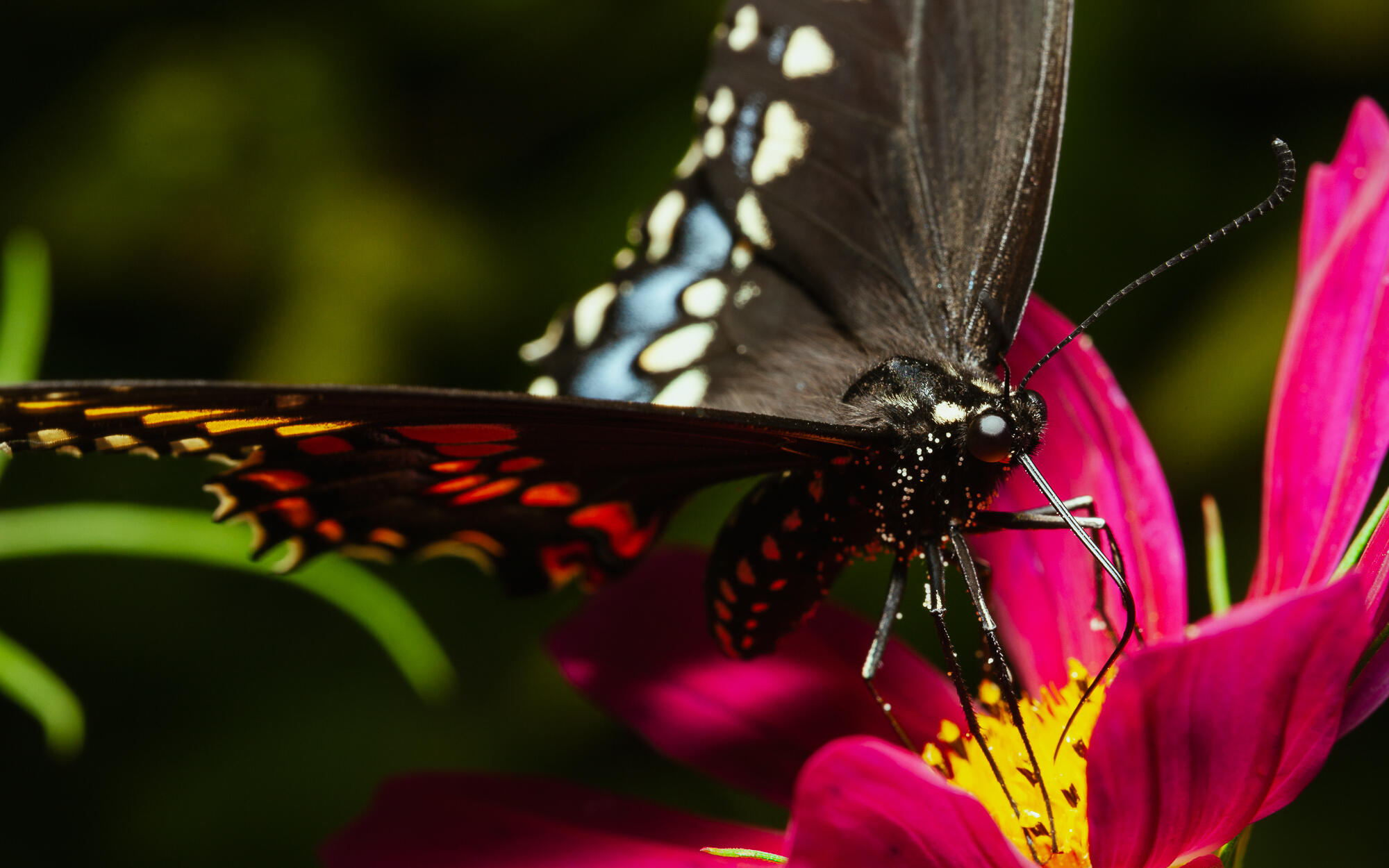
Black Swallowtail ButterflyThe black swallowtail is a flashy garden butterfly with a few fun tricks up its sleeve. Those tail-like extensions on its hindwings give this butterfly its name “swallowtail” (they look a bit like a swallow bird’s tail feathers). You might see black swallowtails fluttering around flowerbeds in Ontario, especially if you have zinnias, thistles, or clover—they love to sip nectar. They’re quick fliers and often beat their wings rapidly even while poised on a flower, almost as if too excited to sit still. As they flit from bloom to bloom, they help pollinate the garden.A mother swallowtail lays her tiny eggs on plants on carrot family plants as well as dill and parsley. When the eggs hatch, the baby caterpillars are so bizarre-looking, you might mistake them for bird droppings! In their early stage, they’re black, spiky, and white-splotched, which is a clever disguise to avoid hungry birds. As the caterpillars grow, they turn into smooth, bright green worms with black bands and orange spots – much prettier. But watch out: if threatened, a swallowtail caterpillar has a surprise defense. It pops out an orange, Y-shaped gland (called an osmeterium) from behind its head, releasing a stinky smell that says “leave me alone!” This doesn’t harm people at all, but would definitely make a bird or ant think twice about snacking on it. The caterpillar feasts on those leafy herbs until it’s plump, then forms a chrysalis (which often looks like a little twig). In Ontario, swallowtail chrysalises can overwinter outside, hatching into new butterflies when warm weather returns. Planting a few dill or parsley plants in your Guelph garden can invite these graceful swallowtails to stay – you might raise your own garden 'pets' and watch the whole marvelous life cycle unfold!
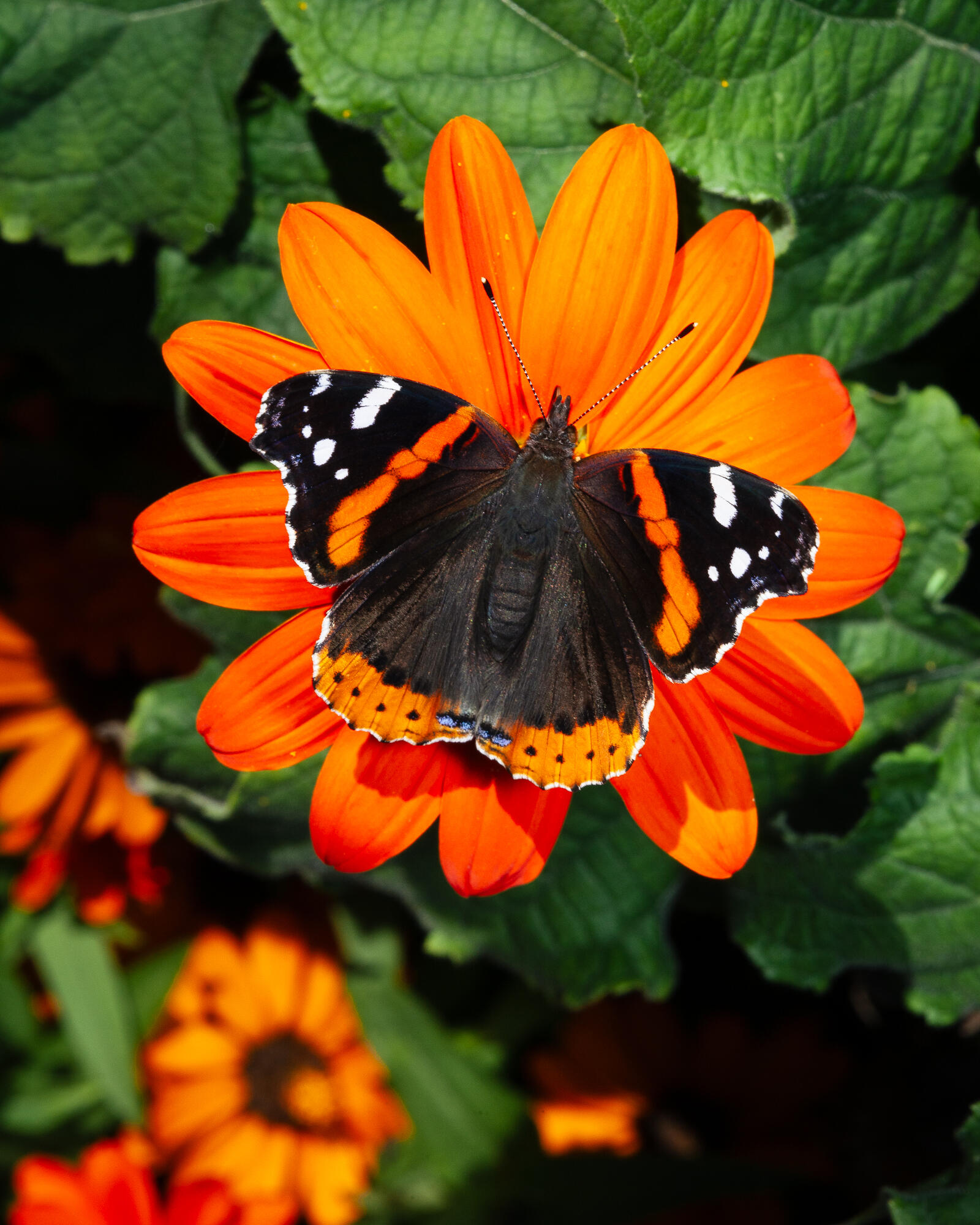
Red Admiral ButterflyThe red admiral is a bold and adventurous butterfly in your garden. It wears dramatic colours: velvety black wings with bright red-orange bands and white polka dots near the tips. This striking pattern isn’t just beautiful to us – it also makes predators think twice, since bright colours can signal a bad taste. Red admirals have personality to spare. Males are known to be territorial: one might “claim” a sunny corner of a yard or park and zoom out to chase away other butterflies (and sometimes even little birds!) that dare enter its airspace. Despite their feisty nature with other butterflies, red admirals can be quite people-friendly. It’s one of the butterflies known to land on an outstretched hand or even someone’s head, perhaps to sip a bit of salty sweat or just to check you out!The life of a red admiral is full of travel. These butterflies can’t survive the freezing winters of Ontario, so each spring new red admirals migrate north from the southern United States. When spring arrives in Guelph, keep an eye on the dandelions and lilacs – you might see the year’s first red admirals refuelling there after their journey. The female lays eggs on stinging nettle plants (yes, the same nettles that can sting your legs on a hike!). The caterpillars are black and spiky with yellow speckles, and they have a neat trick: each one will fold or roll a nettle leaf around itself like a little tent. Safe inside this leaf tent, the caterpillar can munch away without being bothered by birds. As summer goes on, you’ll notice red admirals flitting about gardens and forest edges, sipping nectar from milkweed, asters, and cone flowers. They also enjoy tree sap and rotting fruit – sometimes you’ll spot one sitting on a mushy banana peel left in a compost heap, having a sweet feast! In warm years these butterflies can become very abundant, fluttering everywhere. But when autumn comes, most red admirals head southward again. That means each year brings a new wave of these colourful visitors.
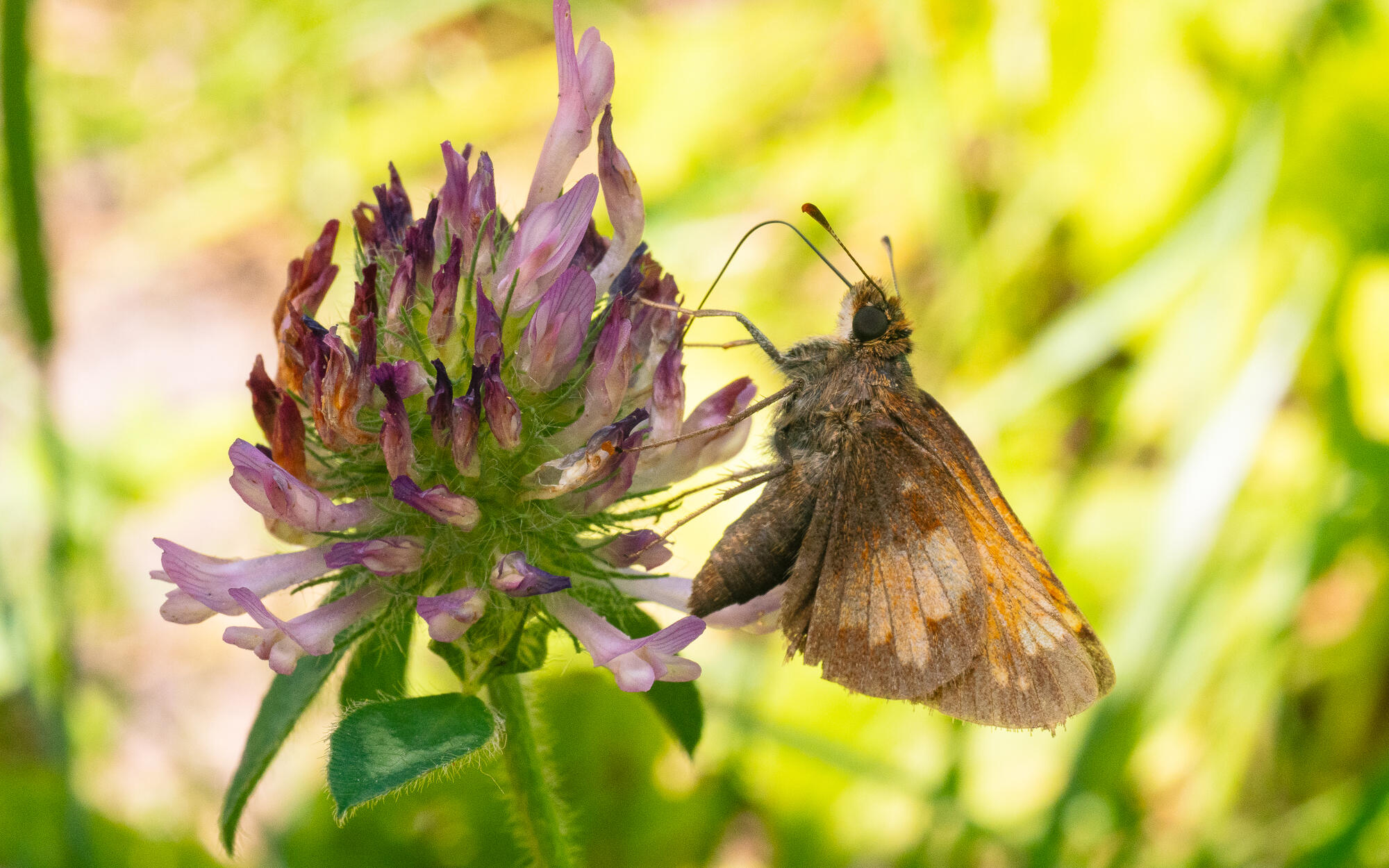
Skipper ButterflySkippers are tiny turbocharged butterflies that zip through gardens and meadows so quickly you might miss them if you blink! These little guys (often orange, brown, or grayish) get their name because their flight is not smooth and gliding like other butterflies, but quick and skipping – darting this way and that like a rock skimming across water. Many skippers are small, with a chunky body and short wings. In fact, they look a bit like a mix between a moth and a butterfly. When resting on a sunny leaf, a skipper often holds its wings at an angle like a tiny fighter jet ready for takeoff. You can also spot them by their cute hooked antennae (the tips of their antennae curl back like a crochet hook, unlike other butterflies’ straight clubbed antennae).Because of their size and camouflaged colours, skippers are easy to overlook – but they are everywhere in the summer. In Ontario, dozens of skipper species flit around grassy fields, lawns, and flower patches. The skipper caterpillars usually live on grasses or sedges. A baby skipper will use silk and leaves to roll itself a snug little tube or shelter in a blade of grass, hiding from predators during the day and coming out to munch at night. Once it’s ready, it forms a small cocoon-like chrysalis in the grass. When the adult skipper emerges, it turns into a super speedy nectar hunter. Though they’re tiny, skippers visit lots of wildflowers (clover blossoms and daisies are favourites) and help with pollination. Some even sip from mud puddles to get minerals – a funny sight if you catch a group of them “puddling.” Next time you walk through a sunny meadow in look low among the clover and grass. The sudden orange blur zooming away at your feet is likely a little skipper on a mission!
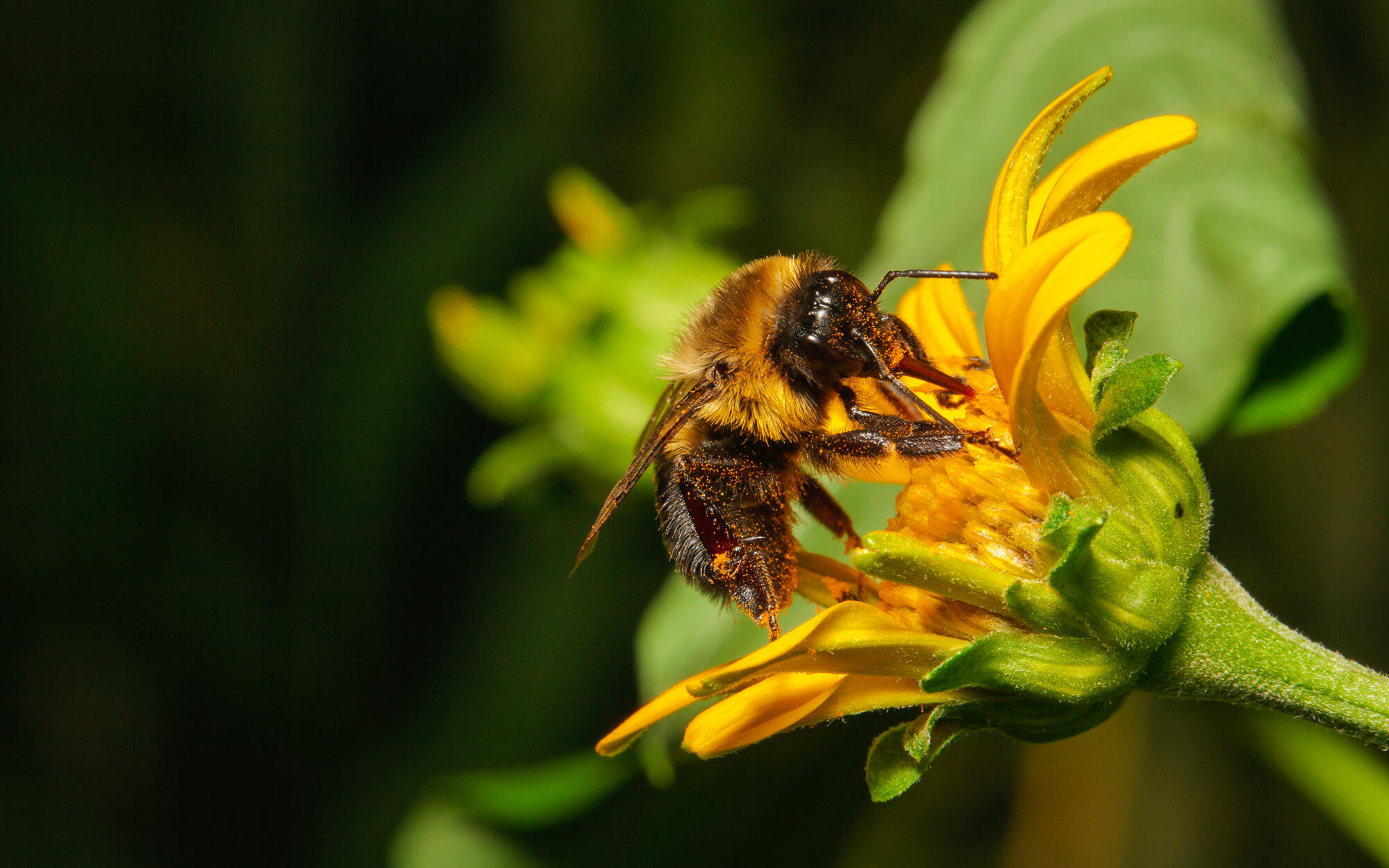
BumblebeeBumblebees are the big, fuzzy teddy bears of the bee world – and they’re also important pollinator champions. With their round, hairy bodies striped in black and yellow, bumblebees are easy to recognize as they clumsily buzz from flower to flower. You can often hear their deep buzz before you see them! Unlike honeybees (which live in huge hives), bumblebees live in much smaller families. In fact, a single queen bumblebee is the only one who survives the winter in Ontario. She hibernates alone in a little hole in the ground. When spring arrives and the first flowers like crocuses and willow catkins bloom, the queen wakes up, hungry and shivering. She’ll sip some nectar, then get to work starting a new colony all by herself. She finds a cozy spot (sometimes an old mouse burrow or a tussock of grass) and lays her first eggs. She even shivers her body to keep those eggs warm, like a caring mother hen! Soon, those eggs hatch into worker bumblebees – daughters that will help their mom gather food and expand the nest through the summer.By mid-summer, a bumblebee nest in Ontario might have anywhere from 50 to a few hundred workers – much smaller than a honeybee hive, but just as lively. Bumblebees are gentle creatures that only sting if they feel truly threatened (for example, if you step on them or grab them). When they’re visiting flowers, you can often get quite close without bothering them. Watch one on a tomato flower or a blueberry bush: bumblebees perform a special trick called “buzz pollination.” They clasp the flower and vibrate their flight muscles super fast, causing pollen to shake out of the flower like pepper out of a shaker. This technique helps pollinate plants that other insects struggle with – thanks to bumblebees, we get more tomatoes, peppers, and blueberries. Bumblebees can also fly in cooler weather and lower light than many other bees, thanks to their fuzzy insulation and ability to warm up their flight muscles by shivering. This means you’ll see them out on chilly mornings and even drizzly days when other insects stay in bed. From spring to fall in Ontario, bumblebees are hard at work in gardens, farms, and wild meadows, making sure all those fruits and wildflowers get pollinated.
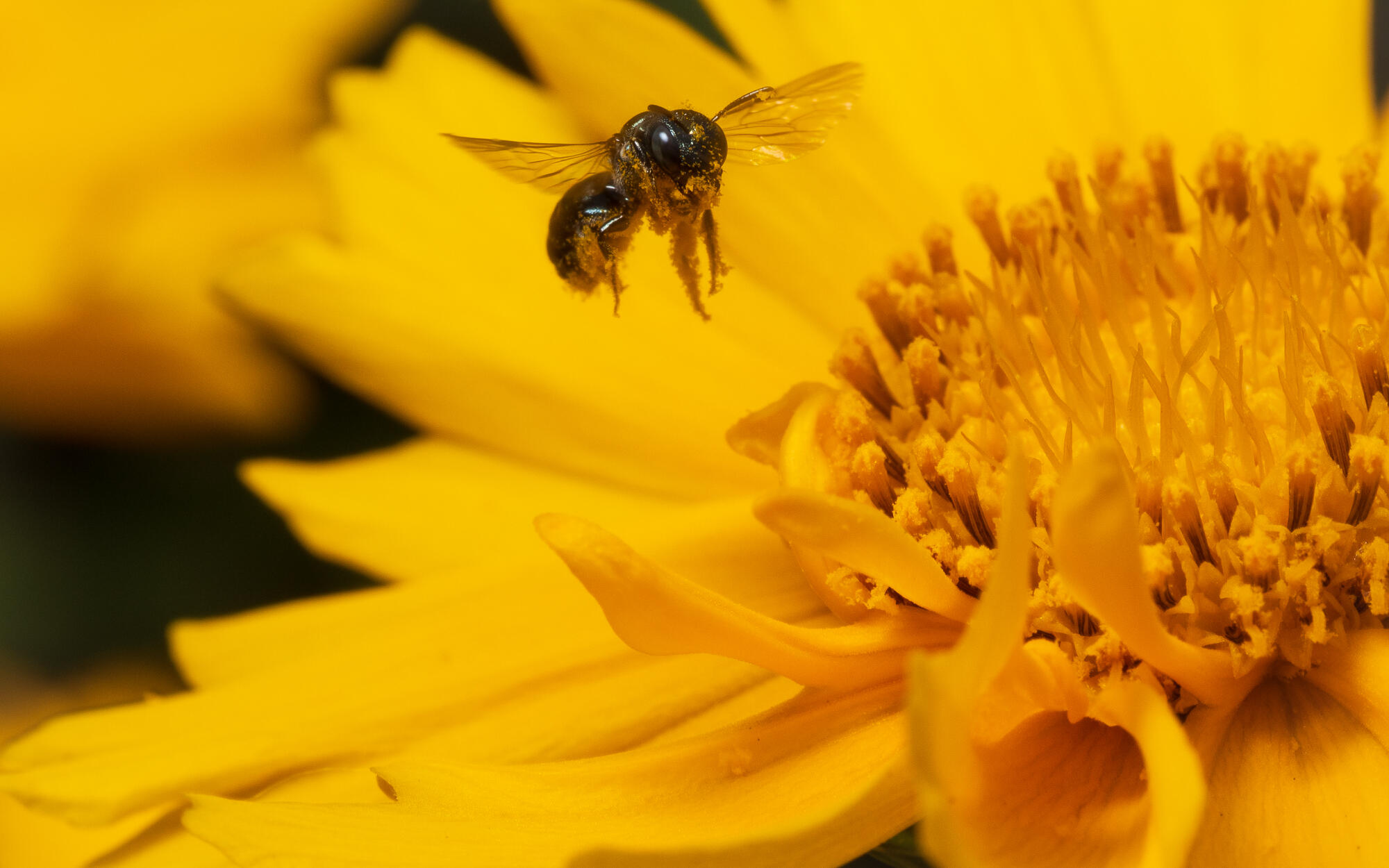
Small Carpenter BeeSmall carpenter bees are tiny, shiny bees that make their homes in the most unassuming places – the hollow stems of dead plants! These little bees (often a glossy black or metallic blue-green) are much smaller than bumblebees, about the size of a grain of rice or a little ant. In Ontario you might find them nesting inside old raspberry canes, sumac stems, or dried flower stalks from last year’s garden. How do they do it? The female carpenter bee chews into the soft pithy centre of a broken or cut plant stem, creating a narrow tunnel that becomes her family’s home. It’s as if she’s making a tiny apartment inside a plant. Inside the tunnel, she builds a line of brood cells: she’ll put a ball of pollen and nectar in one section, lay an egg on it, then wall it off with chewed plant material to make a little “room” for the developing bee. She makes a series of these rooms in the stem hallway. The mother carpenter bee often hangs out at the nest entrance to guard her little ones from intruders. She’s a peaceful parent, though – she won’t bother you in the garden, and she’s very unlikely to sting unless you were to really provoke her.By late summer, new carpenter bee daughters and sons have grown up inside the stem. Often, a few family members will spend the winter together huddled in that hollow stem, escaping the freezing cold. When spring warmth returns to Ontario, out they come to start the cycle anew. Small carpenter bees may be tiny, but they’re quite helpful in the garden. As they visit flowers for nectar (they especially like small blooms on herbs and wildflowers), they carry pollen on their bodies and help plants reproduce. They even do a bit of natural “pruning” by cleaning out dead stems, which can help plants rot and recycle nutrients. If you leave some dried plant stems standing in your schoolyard or backyard over the winter, you might be providing a much-needed bee hotel for these little carpenters. Come summertime, keep an eye on any hollow twigs or stalks – with luck, you’ll see a slender little bee zipping in and out, tending to her secret stem home.
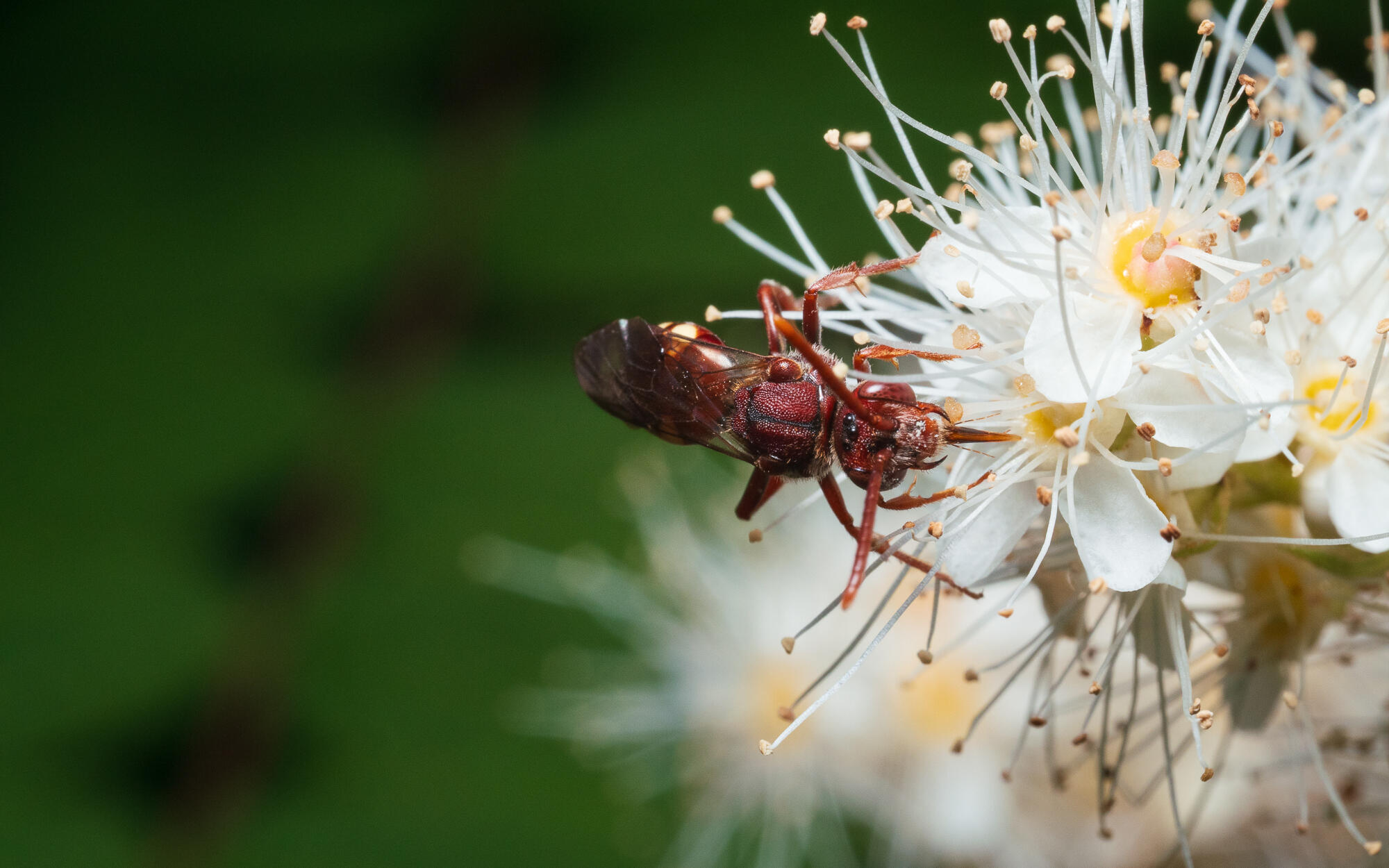
Nomad BeeNomad bees are the sneaky secret agents of the bee world. At first glance, you might not even believe they’re bees – they have slender, wasp-like bodies with bright yellow or red markings and very little fuzz. And unlike most bees, Nomad bees don’t collect pollen or build nests. So what do they do? They follow a lifestyle called cuckoo bees (named after the cuckoo bird). Instead of gathering their own pollen provisions, a female nomad bee will quietly wait around the nesting site of another bee species (often ground-nesting bees like mining bees or cellophane bees). When the coast is clear, she sneaks into the host bee’s tunnel and lays her own egg alongside the host’s eggs and pollen supply. She’s basically hiding her baby in someone else’s nursery! The nomad bee egg hatches and the larva helps itself to the pollen ball that the hardworking host bee collected – this means less food (or none) for the host’s own offspring. In many cases, the cuckoo bee larva will even eliminate the host egg or larva, taking over entirely. It sounds mean, but in nature this strategy works to keep bee populations in balance. Nomad bees have evolved alongside their hosts for millions of years, and despite their trickery, they’re part of a healthy ecosystem.Nomad bees fly swiftly and low to the ground, searching for host nests in sandy banks or lawns. You might see one in Ontario hovering around like a tiny helicopter, then darting down to inspect a hole in the soil or old log where other bees have nested. Because they don’t collect pollen, nomad bees have no pollen-carrying hairs or baskets on their legs or bodies. They survive on nectar from flowers for their own energy, so you might also find them visiting blossoms – but they’ll never be laden with yellow pollen dust like a honeybee or bumblebee. Despite the somewhat sneaky life they lead, nomad bees are harmless to people and actually quite beautiful if you look closely. Some have red abdomens with yellow spots, others are black with yellow stripes, but all have a waspish elegance. Keep an eye on bare patches of ground on warm spring days; those little wasp-like insects you see might just be nomad bees on a covert mission!

Leafcutter BeeHave you ever found a plant leaf with a perfect little circle or oval cut out of the edge, as if someone took a paper hole-punch to it? If so, you’ve discovered the handiwork of a leafcutter bee! Leafcutter bees are nature’s little construction workers. These solitary bees (usually about the size of a honeybee or smaller) carry bright yellow pollen under their bellies, and they have powerful jaws – not for biting you, but for snipping leaves. A mother leafcutter bee will find a snug existing hole or tube (like a hollow plant stem, a crevice in wood, or even a paper tube in a bee house) to build her nest. She then flies out to find the perfect leaves, often favouring rose bushes, redbud trees, or other plants with soft flexible leaves. Using her sharp mandibles, she cuts neat pieces of leaf, often almost perfectly round or oval. It only takes her a few seconds to do this, and she flies off carrying the piece under her body like a green blanket!Back at her nest hole, the leafcutter bee uses those leaf pieces to wallpaper her nest. She lines the tunnel with greenery and makes a series of little chambers. In each chamber she packs a loaf of pollen mixed with nectar (bee bread), lays a single egg on it, and then seals that chamber with another leaf circle – like tucking in her “baby” with a leafy quilt. She repeats this process, filling the tunnel with a row of cozy, leaf-lined rooms each containing one egg. By the end, the nest might look like a tiny leafy cigar from the side! The baby bees will develop safely inside, munching on the packed lunch their mother left. Eventually, they’ll pupate and later chew their way out as new adult leafcutter bees.
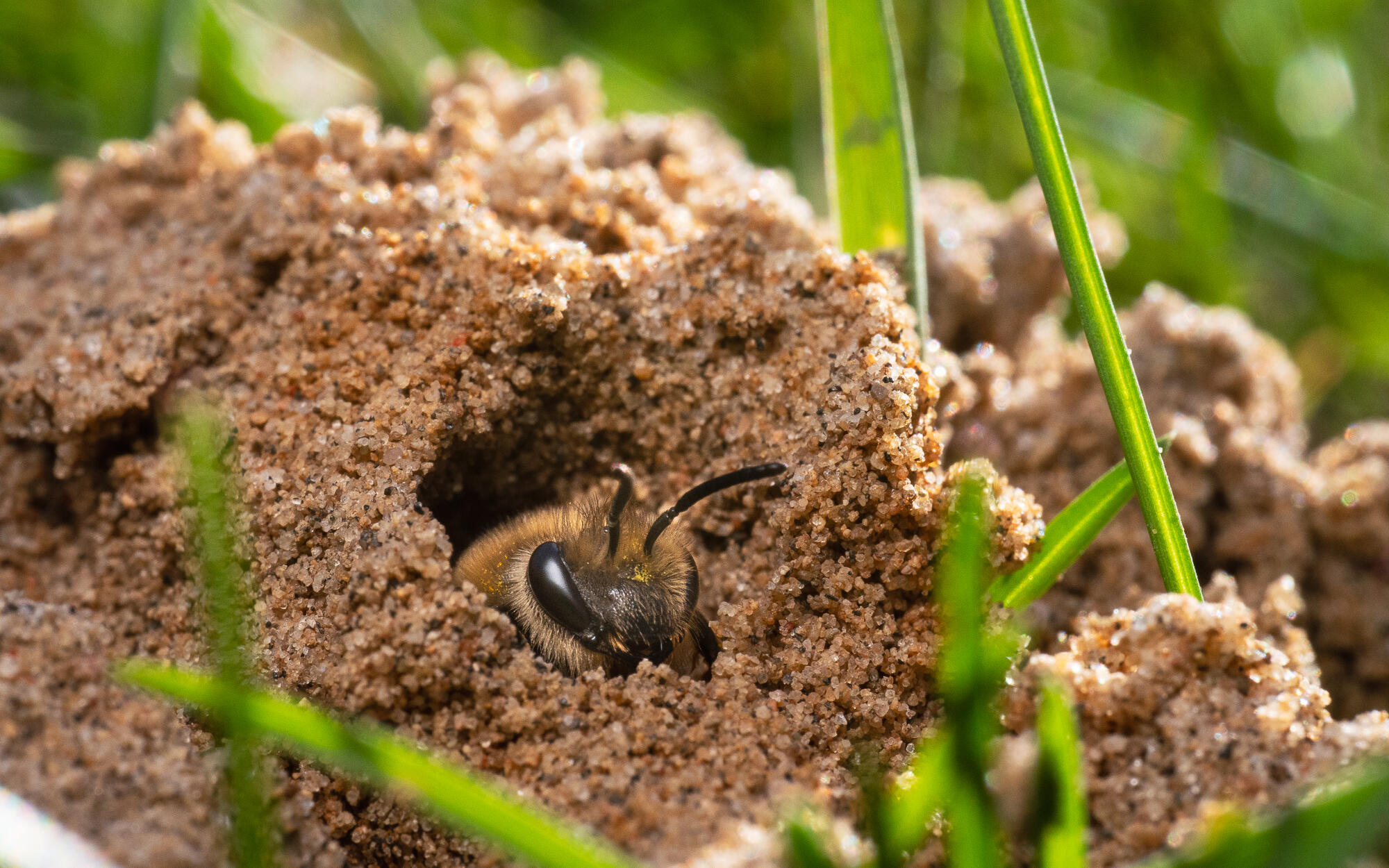
Cellophane BeeCellophane bees are early spring superstars and master builders that prove even small bees can do amazing things. These bees get their name from the special “cellophane” paper they create. Of course, it’s not real plastic – it’s a natural waterproof material they make themselves to line their nests! A cellophane bee (often belonging to the genus Colletes, also called plasterer bees) usually appears in Ontario as soon as the weather starts warming and the last patches of snow melt. Look at the ground in a sunny, sandy spot in April and you might spot a little bee city in action: dozens of tiny bees zipping in and out of pencil-sized holes in the bare soil. These are cellophane bees starting their spring nesting season. Each female bee digs her own tunnel into the ground, which can be 10-20 cm deep, with little side rooms branching off. She gathers pollen and nectar to make a “loaf” of bee food in a chamber, but here’s the special part: before laying her egg on that food, she paints the chamber walls with a secretion from a gland. This secretion dries into a clear, cellophane-like film. It waterproofs the chamber, keeping her eggs and pollen provisions dry and fresh in the damp spring soil.Often many cellophane bees nest in the same area (because if the soil conditions are good, lots of them want to use it), so it can look like an underground neighborhood of little tunnels, each run by a single mom bee. But don’t worry, they are not aggressive at all. These bees live a solitary life (no queens or big hives) and have zero interest in stinging people. In fact, you could sit right next to a busy cellophane bee aggregation and watch them work without fear. The whole show doesn’t last long – cellophane bees focus on spring-blooming trees and flowers like maples, willows, and wildflowers that bloom early. By late spring or early summer, their job is done: the adults finish provisioning their nests and then pass away, leaving behind the next generation safely sealed in their little cellophane sleeping bags underground. Those young bees will emerge the following spring to continue the cycle. If you leave a bit of bare or sandy ground in your garden or schoolyard, you might be lucky to host some cellophane bees. They are silent, hardworking pollinators and one of the first signs of spring’s buzz in Ontario, kicking off the pollinating season before most other bees are awake.
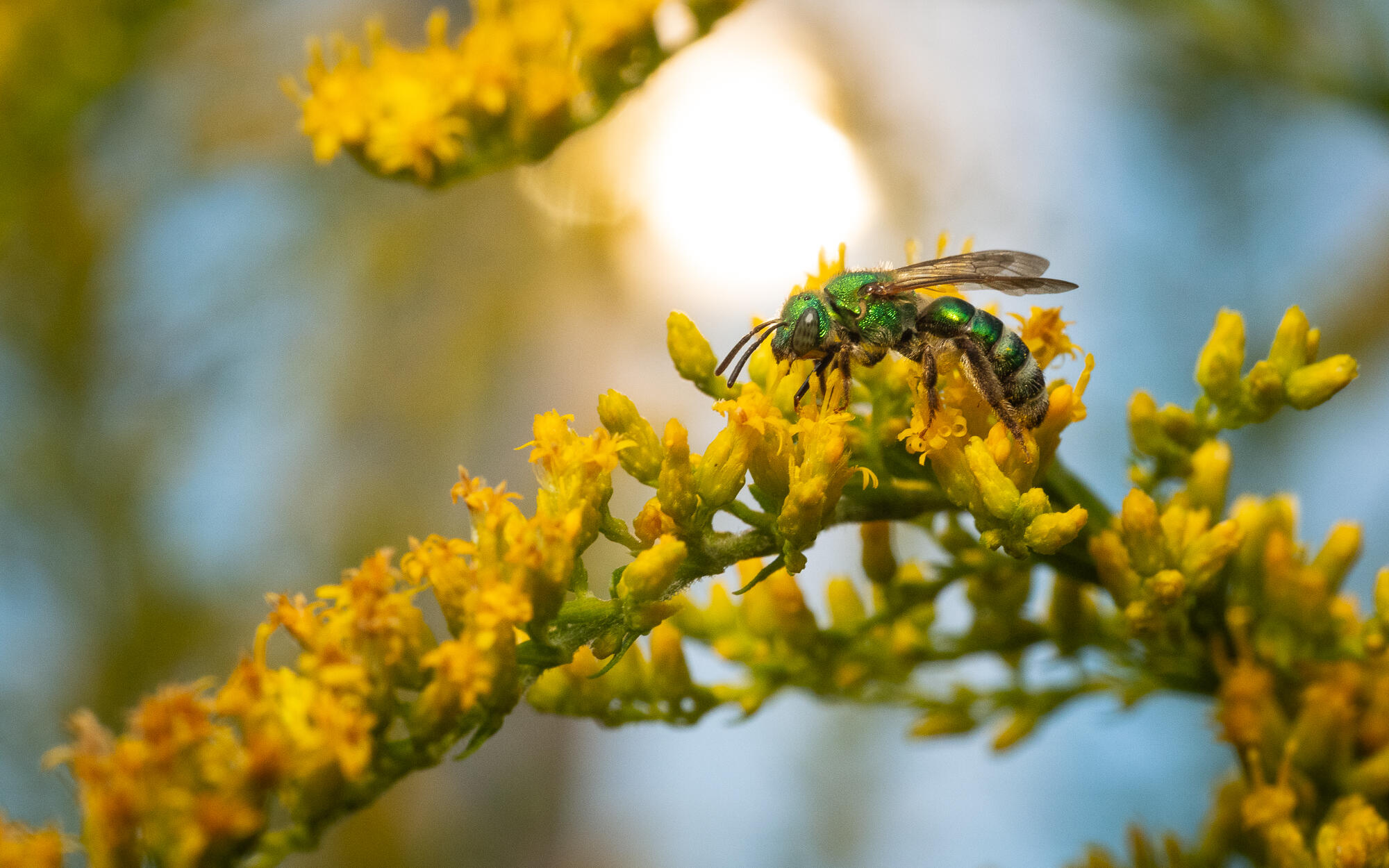
Sweat BeeSweat bees are small sparkle-bees that add a dash of jewel-like colour to Ontario’s gardens and fields. Some species are a shiny metallic green or blue, looking like tiny emeralds or sapphires with wings. Others are striped yellow and black like miniature honeybees, and a few are just plain brown or black (they might not catch your eye as easily). These little bees get their funny name because a few types are known to land on people to lick salty sweat from our skin – it’s like Sports Drink for them, giving a boost of minerals! Don’t worry, they aren’t trying to bite or sting; they’re just thirsty for a teensy bit of salt. If one lands on you, it will tickle more than hurt. In fact, sweat bee stings are extremely rare and mild – they’re very easygoing bees that prefer to mind their own business.Sweat bees are actually one of the most common groups of bees pollinating our wildflowers and crops. If you’ve ever looked at a black-eyed Susan or a clover bloom up close in summertime, you might have seen a glimmering green bee busy gathering pollen – that was likely a sweat bee. Because they are small, people often mistake them for flies or ignore them, but they are pollination powerhouses for flowers big and small. Many sweat bees nest in the ground, similar to cellophane bees, digging little tunnels. Some live completely alone, but others are semi-social – for example, multiple females might share a common entrance hole but have their own individual brood burrows, kind of like a bee apartment building. A cool Canadian connection: one metallic green sweat bee called the Bicoloured Striped Sweat Bee (Agapostemon virescens) was named the official bee of the City of Toronto in 2018! It earned this honor partly because of its neat nesting habits – several females share one nest entrance (like roommates sharing a front door) yet each builds her own nest off the main tunnel. That species is found throughout Ontario, including around Guelph, often seen on sunflowers and other garden blooms.
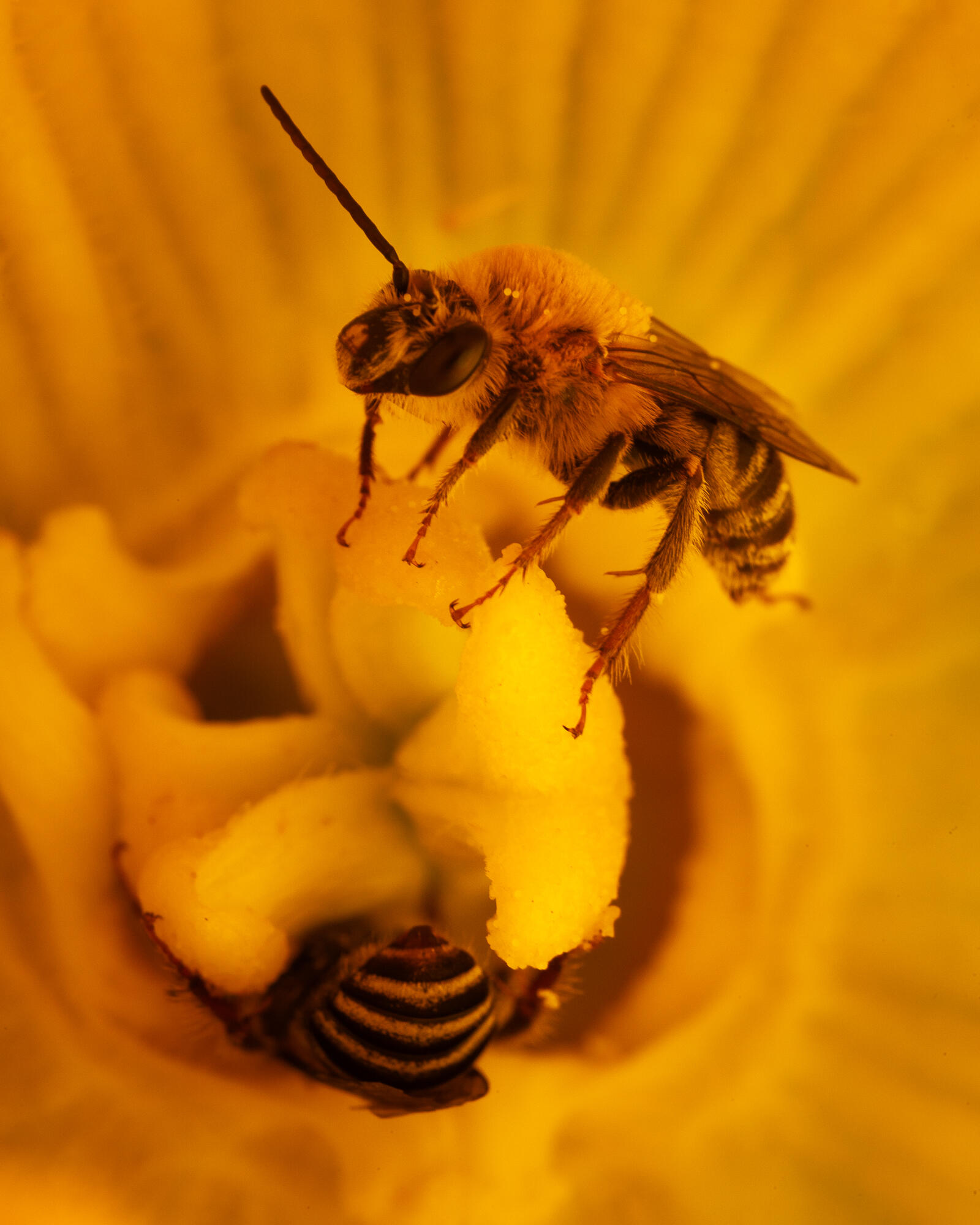
Squash BeeMeet the squash bee, the early morning pollinator that’s absolutely crazy about pumpkins and squashes! If you have ever grown zucchini, pumpkins, or butternut squash, chances are these native bees were hard at work in your garden at dawn. Squash bees are specialists – unlike honeybees or bumblebees that visit all kinds of flowers, squash bees focus almost only on the squash/pumpkin family (scientifically, the Cucurbita plants). They time their day around these blossoms. Squash flowers open at first light, releasing their pollen and nectar early in the morning. The female squash bees wake up at the crack of dawn, just as the big yellow-orange squash flowers uncurl, and they dive right in. They zoom from flower to flower, collecting pollen to bring back to their nests and incidentally pollinating the flowers as they go. By late morning (around 11 AM or noon), those squash flowers start to wilt and close up – and the squash bees’ workday is done! In fact, squash bees are often finished foraging long before most other bees even get started for the day.Squash bees are solitary ground-nesters. A female will dig a tunnel in the soil near a pumpkin patch or garden, often in soft, sandy earth. She creates a few brood chambers off the main tunnel, and in each she lays an egg with a ball of squash pollen and nectar to feed the larva. Because each female does this on her own, you won’t find a big hive – just many individual nests that might be close together if there’s a good squash field. They don’t make honey, but they make something even more valuable to a gardener: more squashes and pumpkins! Squash bees are so efficient at pollinating pumpkins and zucchini that farmers consider them a blessing, ensuring you’ll have plenty of jack-o’-lanterns in time for Halloween.
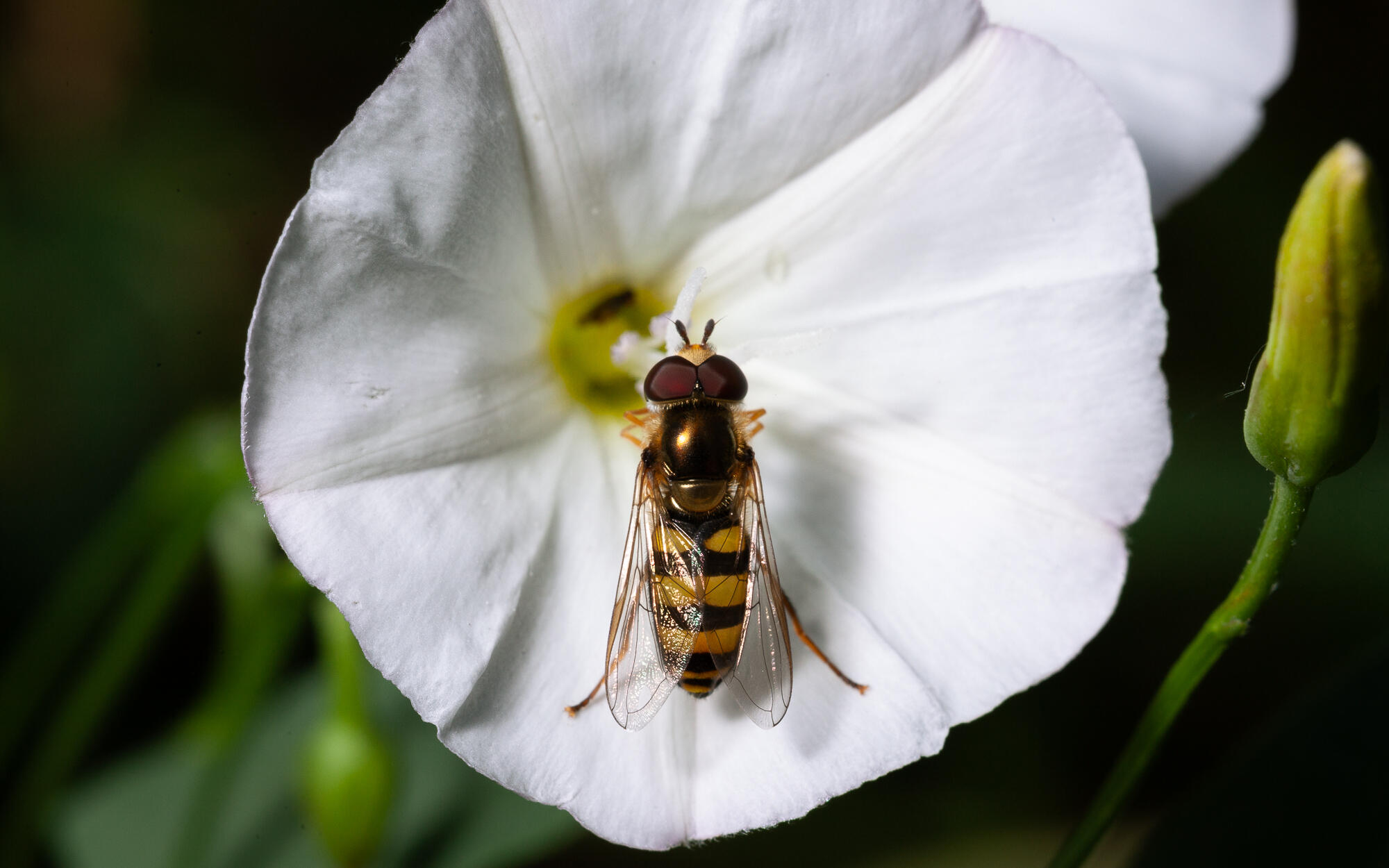
Flower FlyThat buzzing insect hovering like a tiny helicopter over your garden blooms might not be a bee at all – it could be a flower fly, also known as a hoverfly. Flower flies are the great mimics of the insect world. Many of them have yellow-and-black stripes or patterns that make them look a lot like bees or wasps, which helps keep predators (like birds) away. But don’t be fooled: if you look closely, you’ll notice they only have two wings (bees and wasps have four) and big, round fly eyes. And here’s a giveaway – flower flies cannot sting or bite; they’re completely harmless to people, making them wonderful garden guests. In fact, these little flies are quite friendly and may even hover right in front of your face as if to say hello (or more likely, to see if you’re a giant flower!).A hoverfly’s flying skills are impressive. They can hover in one spot in mid-air, zip sideways, up, down, or backwards in a blink, and then suddenly dart off faster than your eyes can follow. They use this talent to sip nectar from flowers without getting in the way of bees, and to escape predators quickly. Flower flies are important pollinators in Guelph. They especially love flat-topped flowers like daisies, goldenrod, yarrow, and Queen Anne’s lace – easy landing pads where they can refuel on nectar and pollen. As they buzz from flower to flower, they transfer pollen just like bees do, helping plants form seeds and fruits. But the superpower of many flower flies is hidden in their youth. While adult hoverflies eat nectar, their larvae (maggots) are carnivorous. For species that have aphid-eating larvae, a female fly will lay her eggs on a plant infested with aphids (those tiny green or brown sap-sucking pests). When the eggs hatch, the little worm-like larvae start gobbling up aphids like candy. A single hoverfly larva can eat dozens of aphids in a day, protecting the plant from harm.
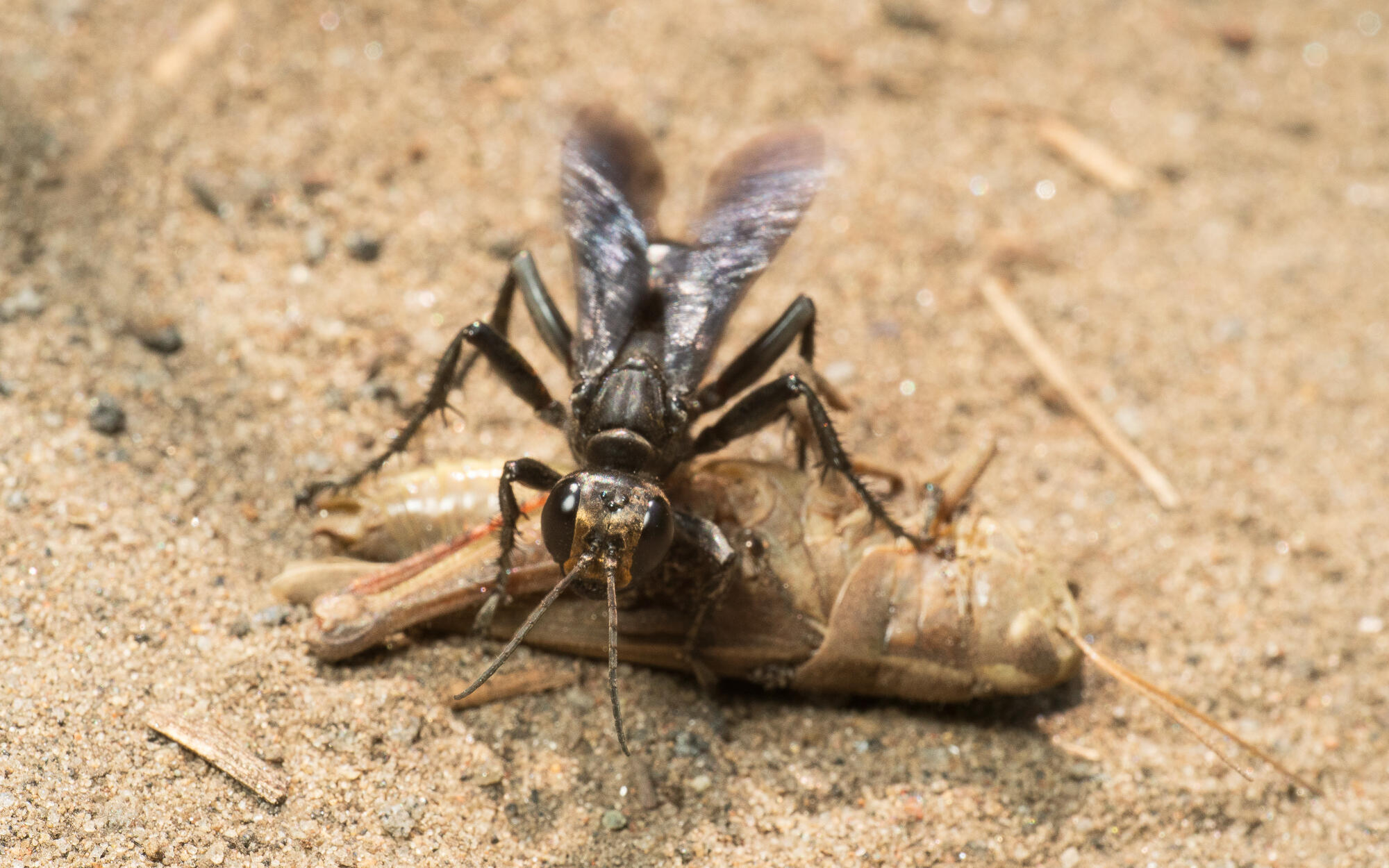
Great Black Digger WaspThe great black digger wasp is a fearsome-looking but surprisingly friendly insect ally you might encounter in Guelph's fields and gardens. This wasp is pretty large (about 3 to 4 cm long) and, as its name says, it’s mostly coal black in colour. Seeing one zoom by can be a bit startling because of its size, but there’s no need to be afraid. These solitary wasps are not aggressive toward people at all. In fact, the great black digger wasp is usually far too busy going about her business to pay any attention to humans. And what impressive business she has! The female wasp is like a mighty hunter and an underground architect combined.In the heat of summer, you might spot a great black wasp female buzzing around patches of loose or sandy soil in a sunny spot (like the edges of a playground or a garden bed). She’s searching for a good place to dig. Using her jaws and legs, she excavates a tunnel into the ground, throwing out little piles of dirt. This tunnel will have several side chambers – it’s going to be a nursery for her young. Once the burrow is ready, the real adventure begins: the wasp goes hunting. Great black digger wasps specialize in catching big insects like katydids, grasshoppers, or crickets. The wasp locates one (often in tall grass or shrubs), and then uses her powerful sting to paralyze the insect. The wasp, much smaller than a grasshopper, can amazingly drag or even fly with this heavy prey back to her burrow. She’ll pull it down into one of the rooms she dug, lay a single egg on it, and seal the chamber. She typically stocks each chamber with one big insect or a few smaller ones. When the wasp’s egg hatches, the wasp larva has a fresh meal waiting – it will slowly eat the paralyzed prey, gaining all the nutrition it needs to grow. By the time it’s finished, the prey is gone and the larva pupates (forms a cocoon) safely in that underground room. Eventually, maybe by the next summer, a new great black wasp will emerge from the ground to continue the cycle.
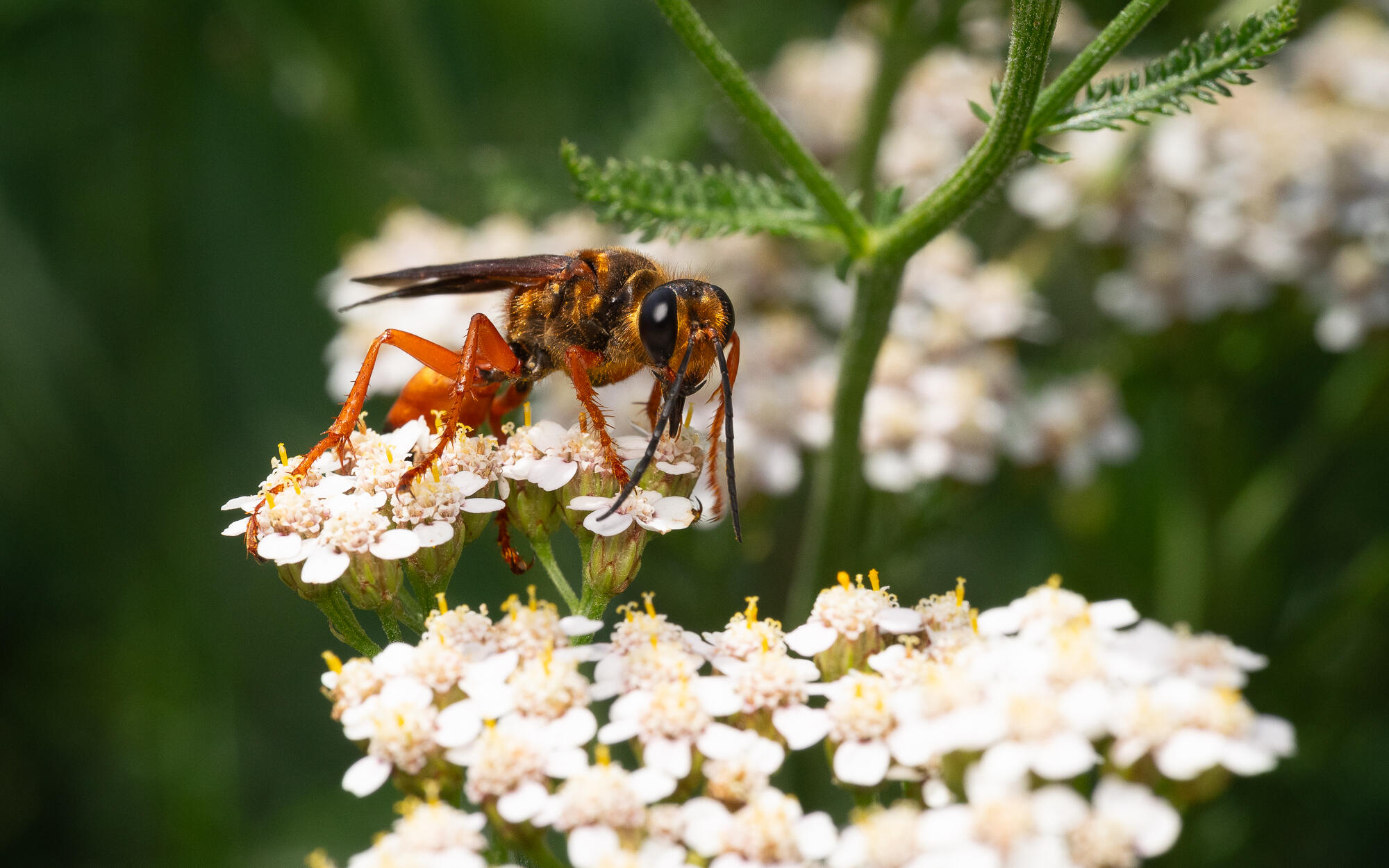
Great Golden Digger WaspThe great golden digger wasp is a stunningly coloured gentle giant that shares a lot in common with her black wasp cousin. You can tell this wasp apart by her looks: she has a black body with bright orange-red legs and a sprinkle of golden fuzz on her head and thorax (the middle section of her body). Some people say she looks like she’s wearing golden armour. She’s similar in size to the great black wasp, and when you see her sipping nectar on flowers, she’s truly a head-turner! But despite her bold appearance, the great golden digger wasp is not out to scare you. Like other solitary wasps, she’s quite peaceful toward humans and would rather avoid conflict. In fact, the males of this species have no sting at all, and the females will only sting if you were to really provoke or grab them.Great golden digger wasps are found in sunny open areas, often where the soil is sandy or well-drained. If you have a dry patch of dirt in your yard or school garden, you might be hosting a few of these wasps in mid-summer. The females dig tunnels just like the great black digger wasp does – sometimes many females will dig nests near each other, making a kind of wasp neighbourhood in the ground, but they don’t actually help each other (each is busy with her own young). After digging her burrow with several chambers, the female golden wasp goes hunting for insects to stockpile as food for her larvae. Her targets are similar – crickets, katydids, grasshoppers. She will sting each prey to paralyze it, then tug it back to her burrow. She might temporarily drop her catch to chase away a curious rival or to rest, but she’ll get it to her nest eventually. In each underground chamber, she places one or two paralyzed insects and lays an egg there, then seals it up. Over the weeks that follow, her larvae will each consume their cached meals and develop safely under the soil.
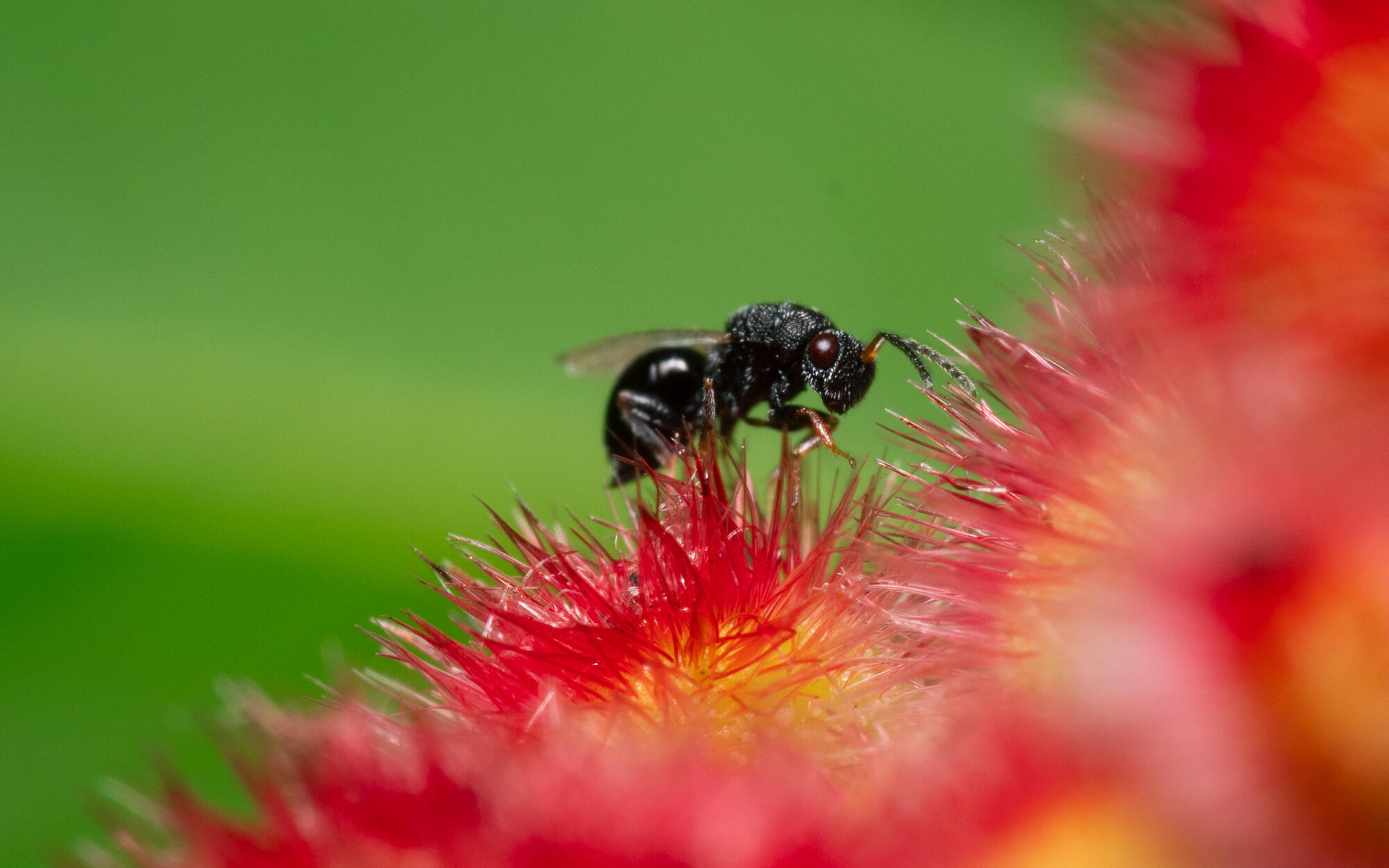
Chalcid WaspChalcid wasps (pronounced “KAL-sid”) are minute marvels of the insect world – so small that you’ve probably never noticed them, yet they’re all around us acting as tiny garden guardians. In fact, some chalcid wasps are among the smallest insects on Earth. The very smallest, a type of fairy wasp, is only about 0.2 millimetres long – that’s smaller than a grain of sand, practically microscopic! Of course, not all are that tiny, but many chalcids look like little black specks flitting around flowers or leaves. Most chalcid wasps are parasitoids, meaning they lay their eggs on or inside other insects’ eggs or larvae. The chalcid egg hatches and the wasp larva slowly eats the host insect from the inside, eventually killing it.As grim as that might sound, this is incredibly useful for us humans and the environment. Those host insects are often ones we consider pests. Chalcid wasps are nature’s pest control squad, keeping populations of harmful insects in check without the need for chemicals or sprays. In fact, farmers sometimes purchase thousands of certain chalcid wasps to release in fields as a natural way to control crop pests.
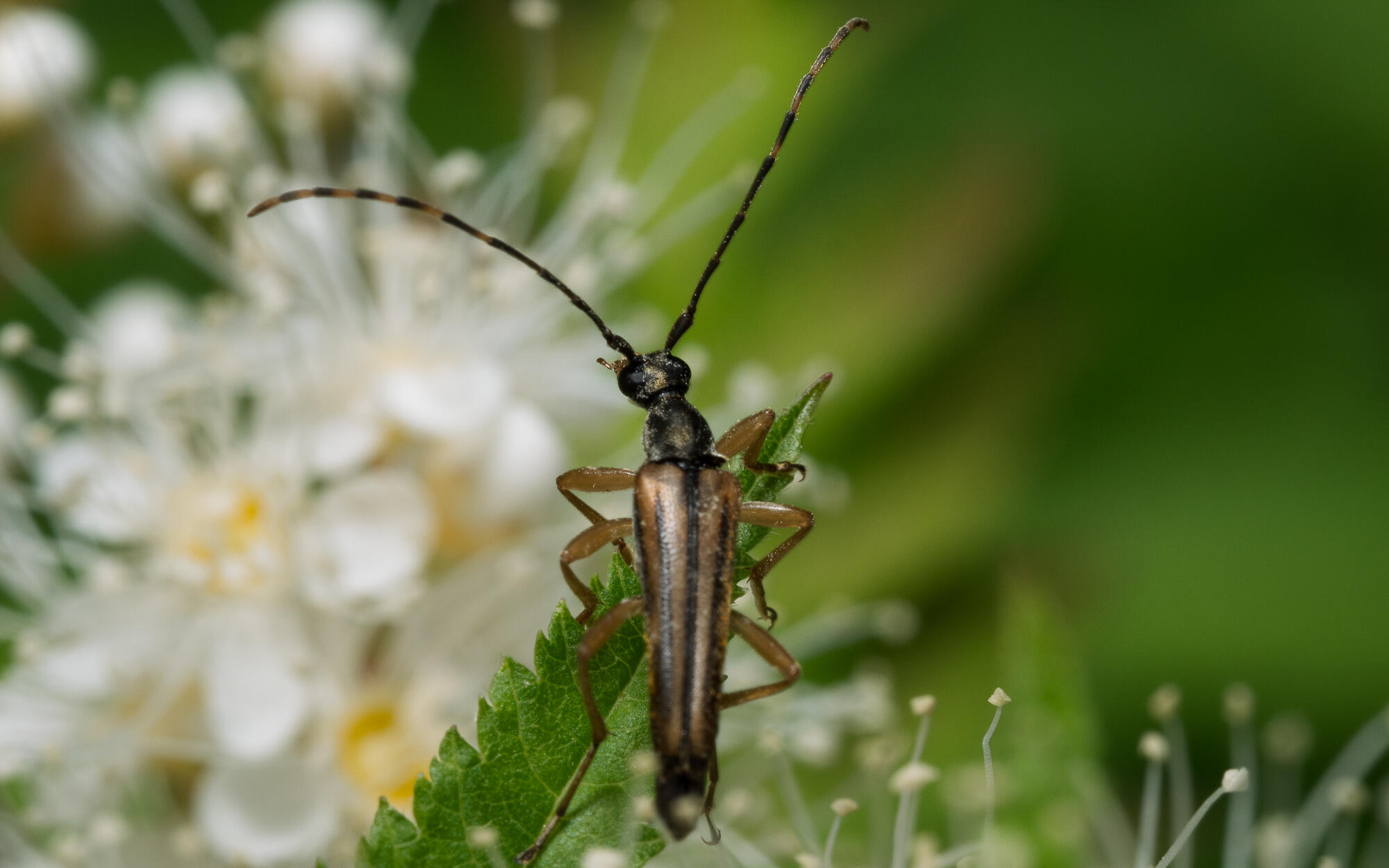
Flower Longhorn BeetleFlower longhorn beetles are charming, long-antennaed beetles often found goofily clambering around on flower heads in the summer sun. In many species, a longhorn beetle’s antennae can be as long as or even much longer than its whole body! In fact, some flower longhorn beetles wear wasp-like jackets of yellow and black – a sneaky costume to deter predators who would rather not eat a “wasp.” But these beetles are completely harmless; they can’t sting or bite in any painful way.What is a flower longhorn doing on that flower? Mostly, it’s snacking on pollen and nectar and maybe taking a nap in the sunshine. They are rather clumsy when they move around on a flower, dragging those big antennae and often bumping into anthers and petals. But that clumsiness is helpful to plants! As the beetle tromps through a flower, pollen grains stick to its body and legs, and then it carries some of those to the next bloom it visits, thus pollinating the flowers. They’re sometimes called “accidental pollinators” because unlike bees or butterflies, the beetles aren’t deliberately collecting pollen, but they end up moving it anyway. Flower longhorn beetles aren’t as efficient pollinators as bees (since they don’t visit as many flowers in a fast sequence), but every little bit counts in nature. Plus, they often visit wildflowers that bees might pass over.


The region we call Guelph is deeply rooted in history. Since long before Canadian Confederation, it has served as the traditional lands of the Attiwonderonk and Haudenosaunee of Turtle Island. Today, it remains the recognized treaty territory of the Mississaugas of the Credit First Nation, bound by the enduring Between the Lakes Treaty (No. 3) forged in 1792 with King George III.